
How to Cut Fiberglass Grating
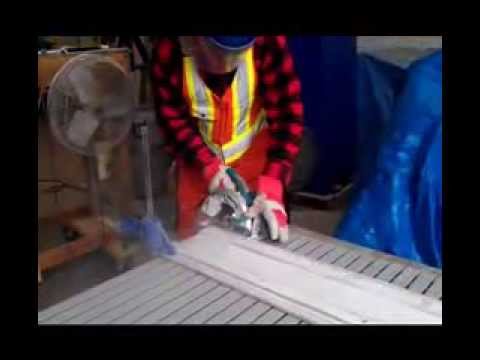
This video shoes how to cut FRP Grating safely using a standard skill saw. They key is to use a diamond tip blade. If you try to use a regular blade to cut fiberglass grating, it will dull very quickly.
Fiberglass reinforced plastic (FRP) grating is a lightweight, corrosion-resistant alternative to traditional steel grating. It is commonly used for industrial walkways, platforms, stair treads, and other applications where durability and resistance to moisture or chemicals are important. One advantage of fiberglass grating is that panels can be cut to fit specific dimensions using appropriate tools and techniques.
Whether you are installing new FRP grating or modifying an existing panel, knowing how to cut fiberglass grating correctly helps prevent damaged edges, uneven cuts, and unnecessary material waste. With the right saw blade, proper safety equipment, and a stable cutting surface, you can cut fiberglass grating to meet your project’s requirements.
Fiberman supplies molded and pultruded fiberglass grating in standard panel sizes and offers custom cutting options. This guide explains the tools, preparation, and cutting techniques needed to work with FRP grating.
Key Takeaways
- Use the right saw blade. A diamond-tipped blade suitable for fiberglass composites helps produce cleaner cuts and lasts longer than conventional wood-cutting blades.
- Secure the grating before cutting. Clamps and a straightedge guide help prevent movement and improve cutting accuracy.
- Protect yourself from fiberglass dust. Wear appropriate respiratory protection, safety glasses, gloves, and protective clothing. Use effective dust extraction and ventilation.
- Cut at a controlled speed. Avoid forcing the blade through the grating, which can cause binding, overheating, or uneven cuts.
- Seal exposed edges. Apply a compatible edge-sealing product recommended by the grating manufacturer to protect exposed fiberglass.
- Check the finished panel. Verify the dimensions, edge condition, and support requirements before installation.
What Tools Do You Need to Cut Fiberglass Grating?
Fiberglass grating can be cut using common power tools equipped with blades designed for fiberglass-reinforced composites. The appropriate tool depends on the type of grating, panel thickness, and shape of the cut.
Before beginning, gather the following equipment:
- Circular saw with a suitable diamond-tipped blade
- Jigsaw or reciprocating saw with a fiberglass-compatible blade for curved or irregular cuts
- Measuring tape and marking pencil
- Straightedge or plywood cutting guide
- Clamps to secure the panel and guide
- Stable work surface with proper support
- Safety glasses or goggles and appropriate respiratory protection
- Gloves, hearing protection, and protective clothing
- Dust extraction equipment suitable for fiberglass dust
- Manufacturer-approved edge-sealing product
A circular saw is generally suitable for straight cuts across molded or pultruded fiberglass grating. For curves, notches, and irregular shapes, a jigsaw or reciprocating saw may provide greater control.
Always check the saw and blade manufacturer’s recommendations before cutting fiberglass composites.
How to Cut Fiberglass Grating: Step-by-Step Instructions
Step 1: Measure and Mark the Fiberglass Grating
Start by measuring the area where the fiberglass grating will be installed. Determine the required panel length and width, allowing for the clearances specified in the installation design.
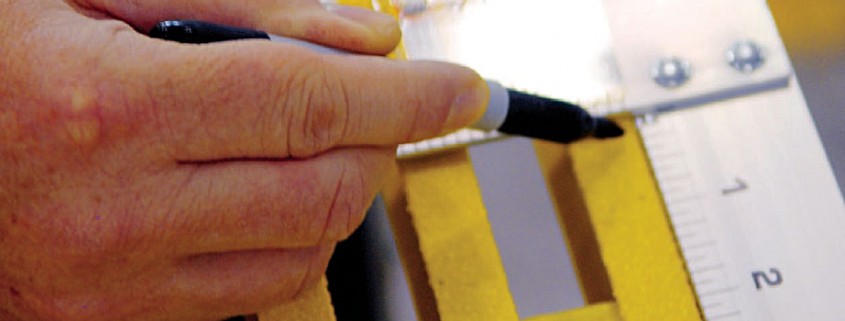
Use a measuring tape and pencil or suitable marking tool to identify the cutting line. Double-check your measurements before making any cuts.
For molded fiberglass grating, consider the mesh pattern and how the finished panel will rest on its supports. For pultruded grating, pay particular attention to the direction of the load-bearing bars.
Cutting a panel incorrectly can affect its structural performance, so review the manufacturer’s fabrication instructions and load tables before removing material.
Step 2: Secure the Panel and Cutting Guide
Place the fiberglass grating on a stable work surface that supports the panel on both sides of the intended cut. Make sure the offcut is also supported so it cannot drop or pinch the blade.
Clamp the panel securely to prevent movement.
For straight cuts, clamp a straight piece of plywood or another suitable guide alongside the marked cutting line. This provides a consistent reference for the saw and makes it easier to maintain a straight cut than following a pencil line by hand.
Keep clamps and supports clear of the saw’s cutting path.
Step 3: Select the Right Blade
Choosing the correct blade is one of the most important steps when cutting fiberglass grating.
A diamond-tipped blade designed for fiberglass composites is generally a good option. Fiberglass is abrasive, and conventional wood-cutting blades can wear quickly when used on FRP materials.
A suitable blade helps maintain cutting efficiency and reduces the likelihood of rough or uneven edges.
Before cutting, confirm that the blade is compatible with the saw, the grating material, and the manufacturer’s recommended operating speed.
Step 4: Cut the Fiberglass Grating at a Controlled Speed
With the panel secured and the cutting line marked, begin cutting along the guide.
Use a steady, controlled feed rate and allow the blade to do the work. Cutting fiberglass grating may require a slower feed rate than cutting wood.
Avoid pushing the saw too quickly. Excessive force can cause the blade to bind, overheat, or produce an uneven cut.
If the blade begins to bind, stop cutting and disconnect the tool from its power source before inspecting the setup.
Maintain proper support throughout the cut, especially when working with larger panels.
Step 5: Control Fiberglass Dust
Cutting FRP grating generates fiberglass and resin dust that can irritate the eyes, skin, and respiratory system.
Use appropriate dust extraction equipment and perform cutting in a well-ventilated work area. Where possible, use local exhaust ventilation to capture dust near the cutting point.
Wear a properly fitted respirator with particulate filters selected for the exposure conditions, along with eye protection and protective clothing. Follow applicable workplace safety requirements and the manufacturer’s safety instructions.
Do not rely on a household fan alone to control fiberglass dust, as it may spread particles throughout the work area.
After cutting, use a suitable HEPA-filtered vacuum or other approved cleaning method to collect dust. Avoid dry sweeping or using compressed air, which can redistribute particles into the air.
Step 6: Seal the Cut Edges
Cutting fiberglass grating exposes the internal fiberglass reinforcement and resin structure along the cut edges.
These exposed areas should be sealed according to the grating manufacturer’s recommendations to help protect the material against moisture and chemical exposure.
Fiberman’s original cutting guide recommends resealing cut edges with polyurethane. However, the appropriate coating should be confirmed for the specific grating resin, operating environment, and chemical exposure.
Use a compatible, manufacturer-approved edge-sealing product and follow its application and curing instructions.
Step 7: Inspect the Finished Panel
After cutting and sealing, inspect the fiberglass grating before installation.
Check that the panel matches the required dimensions and that the cut edges are free from significant splintering, cracking, or damaged reinforcement.
Confirm that the panel has adequate support and that the cutting process has not compromised the required load-bearing structure.
For walkways, platforms, and other load-bearing installations, follow the manufacturer’s installation guidelines, load tables, and applicable engineering requirements.
How to Cut Curves and Angles in Fiberglass Grating
Not every fiberglass grating installation requires straight cuts. Panels may need to fit around pipes, columns, equipment, or other structural features.
Curved and angled cuts can be made using a jigsaw or reciprocating saw equipped with a blade suitable for fiberglass composites.
Begin by marking the required shape on the panel. Secure the grating firmly and make the cut gradually, following the marked outline.
Avoid tight turns or excessive pressure that could cause the blade to bind or damage the surrounding grating.
Once the cut is complete, inspect the edges and apply the appropriate protective sealant.
For complex openings or cuts that remove load-bearing material, consult the grating manufacturer or a qualified engineer before proceeding.
Cutting Molded vs. Pultruded Fiberglass Grating
Both molded and pultruded FRP grating can be cut to size, but their construction affects how panels should be measured, modified, and installed.
Cutting Molded Fiberglass Grating
Molded fiberglass grating features an interconnected mesh pattern that provides strength in two directions.
Its construction makes it suitable for many applications requiring custom panel dimensions, including walkways, trench covers, and industrial platforms.
When cutting molded grating, consider the mesh openings and the placement of the supporting structure. The finished panel must have sufficient support along its edges and any other locations specified by the manufacturer.
Cutting Pultruded Fiberglass Grating
Pultruded fiberglass grating consists of parallel load-bearing bars connected by cross-rods.
Unlike molded grating, pultruded grating is designed to carry loads primarily in the direction of its bearing bars.
When cutting pultruded grating, it is especially important to preserve the required bearing bar arrangement and ensure the bars span correctly between supports.
Cutting through load-bearing bars or modifying cross-rods can affect panel performance. Always consult the manufacturer’s fabrication instructions and load tables before making modifications.
Common Mistakes to Avoid When Cutting FRP Grating
Proper preparation helps prevent cutting errors and unnecessary material waste.
Using the Wrong Blade
Standard wood-cutting blades can dull quickly when cutting fiberglass. Choose a blade designed for abrasive composite materials.
Cutting Without Securing the Panel
An unsecured panel can shift during cutting, resulting in uneven edges or an increased risk of injury. Always clamp the grating and support both the panel and offcut.
Cutting Too Quickly
Forcing a saw through fiberglass grating can cause blade binding, excessive heat, and rough cuts. Maintain a controlled cutting speed.
Ignoring Fiberglass Dust
Fiberglass dust should not be treated like ordinary sawdust. Use appropriate respiratory protection, dust extraction, and cleanup procedures.
Forgetting to Seal Cut Edges
Unsealed edges may expose fiberglass reinforcement to moisture or chemicals. Apply the protective coating recommended for the specific grating material.
Overlooking Load Requirements
Cutting a panel changes its dimensions and may affect its load-bearing performance. Verify support spacing, bearing direction, and installation requirements before cutting.
Should You Cut Fiberglass Grating Yourself or Order Custom-Cut Panels?
Cutting fiberglass grating on-site can be practical when a project requires minor adjustments or when installers have the appropriate tools and equipment.
However, ordering custom-cut panels may be a better option for projects involving numerous panels, complex dimensions, or limited fabrication resources.
Professional cutting can help reduce on-site fabrication time and material waste while ensuring panels are prepared according to the supplied specifications.
Fiberman offers both full-size fiberglass grating panels and custom fabrication options. Customers can purchase standard panels for field cutting or request panels cut to their required dimensions.
Order Fiberglass Grating From Fiberman
Whether you need full-size panels for field fabrication or fiberglass grating cut to your specifications, Fiberman can help you find the right product for your project.
We supply molded and pultruded fiberglass grating for industrial walkways, platforms, stair treads, trench covers, and other applications. Our team can help you review available panel sizes, grating profiles, and fabrication options.
Contact Fiberman today at 1.844.599.0260 to request a competitive quote for fiberglass grating or custom-cut panels.
Frequently Asked Questions About Cutting Fiberglass Grating
What is the best blade for cutting fiberglass grating?
A diamond-tipped blade designed for fiberglass-reinforced composites is generally recommended. Fiberglass is abrasive, so conventional wood-cutting blades may wear quickly. Always confirm blade compatibility with the cutting equipment and grating material.
Can you cut fiberglass grating with a circular saw?
Yes. A circular saw equipped with a suitable fiberglass-cutting blade can be used for straight cuts. Secure the panel, use a cutting guide, and maintain a controlled feed rate.
Can you use a jigsaw to cut FRP grating?
Yes. A jigsaw with a fiberglass-compatible blade can be useful for curves, notches, and irregular openings. Make sure the panel is securely supported and avoid forcing the blade through tight turns.
Do you need to seal fiberglass grating after cutting?
Yes, cut edges should be sealed according to the manufacturer's recommendations. Cutting can expose fiberglass reinforcement, and an appropriate protective coating helps maintain the material's resistance to environmental exposure.
Is fiberglass grating difficult to cut?
Fiberglass grating is relatively easy to fabricate with suitable tools, although the material is abrasive and generates dust. Proper blade selection, panel support, protective equipment, and cutting techniques are important for achieving good results.
Can molded and pultruded grating be cut the same way?
Both types can be cut using suitable tools, but their structural requirements differ. Molded grating has an interconnected mesh pattern, while pultruded grating relies on parallel bearing bars. The cutting layout must account for the type of grating and its required support arrangement.
Can you cut fiberglass grating to fit around pipes or equipment?
Yes. Fiberglass grating can be cut to accommodate pipes, columns, and other obstructions. However, large openings or cuts that remove structural material may require additional support or engineering review.
Can Fiberman supply fiberglass grating cut to size?
Yes. Fiberman supplies standard fiberglass grating panels and offers custom cutting and fabrication options. Contact the team with your dimensions, grating specifications, and project requirements to request a quote.



 Fast Delivery of Molded Fiberglass Grating across Canada and USA via our Superior Logistics Network